October 11, 2026 — The 2026 Nobel Prize in Physics honours a man who turned a cubic kilometre of Antarctic ice into the world’s strangest telescope — and in doing so, opened an entirely new way of studying the universe.
Francis Halzen, of the University of Wisconsin–Madison, was awarded the prize for his decisive contributions to the IceCube Neutrino Observatory and the discovery of high-energy neutrinos from deep space. Halzen first proposed that transparent glacial ice could serve as a detection medium for ghostly cosmic particles, then spent decades driving the international collaboration that built it.
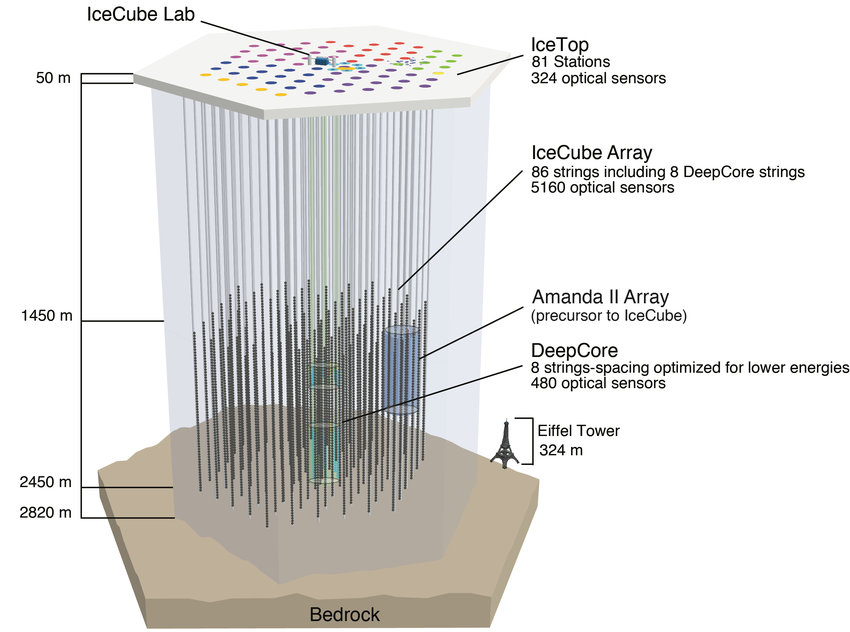
IceCube is an engineering marvel: more than 5,000 optical sensors strung on 86 cables, frozen into the ice sheet at the South Pole and operated by over 450 scientists across 58 institutions in 14 countries. Since its landmark 2013 discovery of astrophysical neutrinos, the observatory has traced the particles to distant galaxies and, in 2023, detected neutrinos streaming from our own Milky Way.
Neutrinos — nearly massless particles that pass through planets as if they were empty space — now join visible and invisible light as messengers of the cosmos, letting astronomers see violent events that light alone cannot reveal.
Colleagues describe Halzen as the rare visionary who pairs a wild idea with the patience to build it. With the first data from IceCube’s major upgrade expected soon, his telescope of ice is only just getting started.
The prize continues a Nobel week honouring fundamental science, alongside the chemistry award for mirror-image molecules. For Halzen, the recognition caps a career built on an idea many once considered impossible — proof, his colleagues say, that the biggest discoveries still begin with someone willing to look where no one else is looking.