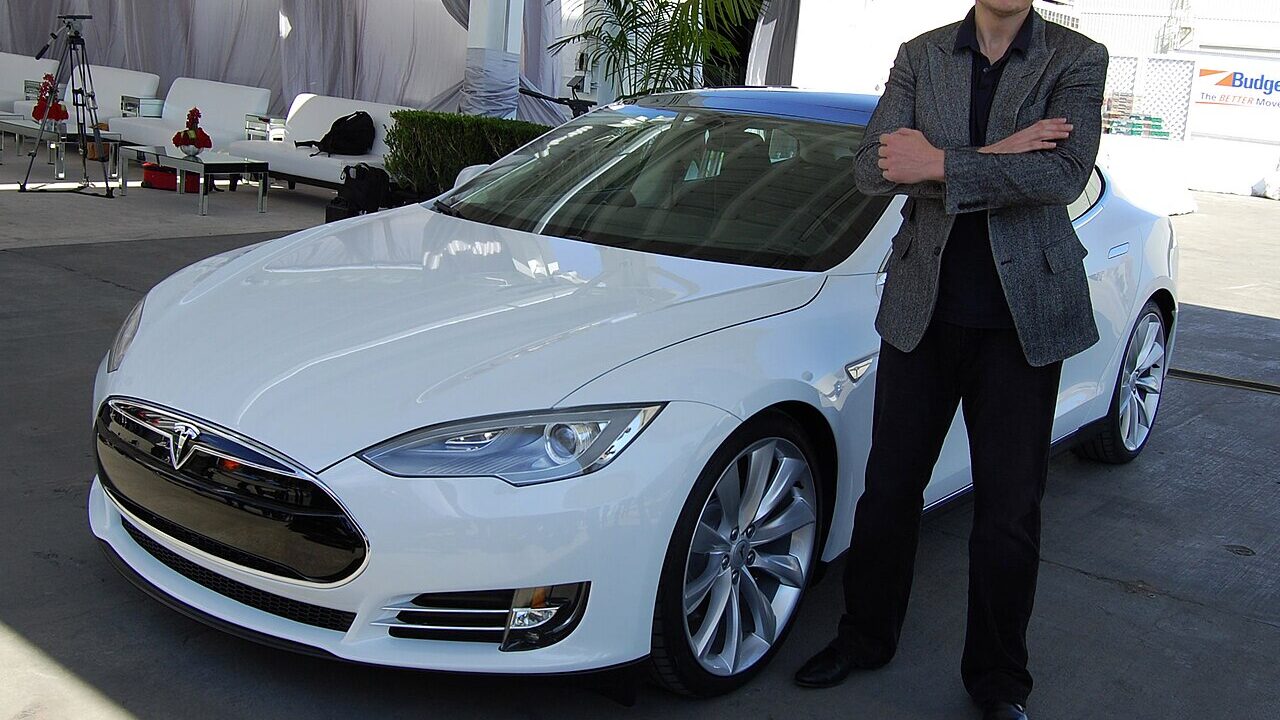
At a SpaceX rocket test site in Texas on Thursday night, Elon Musk staged the most theatrical product demonstration of his career. A redesigned Tesla Roadster drove up a curved, inverted ramp, hung upside down in the dark, leapt clean over a line of parked cars, spun through the air and landed on its wheels — with nobody inside.
The Roadster’s power comes from ten cold-gas thrusters borrowed from SpaceX rocketry, fed by tanks of compressed air and aimed through small nozzles to steer the car mid-flight. Powerful suction fans on the underside let it grip the ramp and cling to the ceiling. Tesla and SpaceX engineers built the car jointly, and Tesla design chief Franz von Holzhausen and vehicle engineering chief Lars Moravy stood alongside Musk on stage.
Nine years in the making
The reveal has been nine years in the making. The second-generation Roadster was first unveiled in 2017 and promised for 2020; it finally appeared in a hard-edged, angular redesign reminiscent of the Cybertruck, with steer-by-wire controls and an active rear wing. Musk called it “the best of the last of the human-driven cars” and said production would begin in 2028. Footage of the night’s aerial manoeuvres has been replayed millions of times since Thursday.
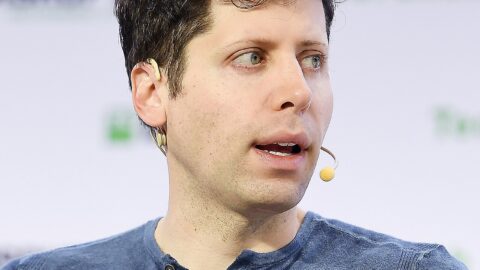
Like every billion-dollar bet in the industry right now, the Roadster is performing for two audiences at once: investors who want Tesla to be more than a car company, and a public that loves the show. OpenAI’s $50 billion question is how Sam Altman will bridge his revenue gap, while Alibaba’s Joe Tsai has been urging Europe to bet on open-source AI — Musk’s answer is pure spectacle.
What the stunts didn’t prove
For all the drama, the fine print matters. Every stunt was run autonomously — no driver was inside, and the Optimus robot in the seat was set dressing. Tesla claimed a 0–60 mph run of 0.81 seconds with the thrusters firing, and a top speed above 250 mph, but no independent body has checked any of it. The reported figures are steep: a $50,000 reservation, a $245,000 deposit for the thruster version, and an invite-only single-seat “Rocket” variant capable of genuine flight — which Tesla acknowledges would not be road-legal, since aviation rules treat airborne vehicles as aircraft.
Musk himself sounded the only cautious note of the night: “Success is not guaranteed,” he told the crowd. “Excitement is 100 percent guaranteed.”