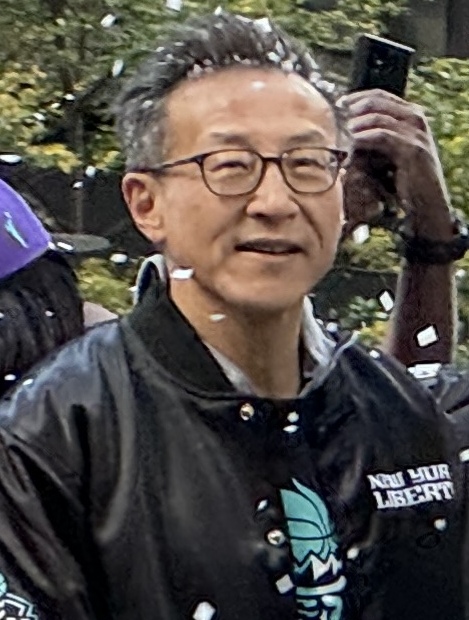
October 11, 2026 — Alibaba chairman Joe Tsai has a blunt message for Europe’s leaders and investors: if the continent wants technological independence, it should bet on open-source artificial intelligence — and build the computing muscle to run it at home.
Speaking this week at the Wave by Vento technology conference in Turin, Italy, the Alibaba co-founder argued that open models offer Europe its only realistic path to AI sovereignty, freeing it from dependence on proprietary systems controlled by American and Chinese giants alike. No country, he warned, should fully trust another nation’s technology, since access can be switched off when politics or circumstances change.
Tsai said Europe is sitting on underused advantages: world-class researchers — by his estimate, Europeans make up 20 to 30 per cent of staff at leading US AI labs — and vast troves of industrial data from factories and logistics networks that could train specialised AI tools. What the continent lacks, he said, is the data-centre capacity to train and run models on European soil.
The pitch doubles as strategy for his own company. Alibaba’s Qwen family of open models has already spawned more than 151,000 derivative projects on the Hugging Face platform, and Tsai pointed to China’s open-source drive as proof that shared research can accelerate innovation even under export constraints.
European policymakers have identified the concentration of frontier AI development outside the EU as a strategic weakness. Whether they take Tsai’s advice — and whether his open-source evangelism is partnership or salesmanship — will shape the continent’s place in the AI race for years to come.
Tsai’s remarks also carried an unmistakable commercial logic: the more the world builds on open foundations, the more Alibaba’s open models sit at the centre of them. The company recently opened data centres in France, signalling it intends to be part of Europe’s infrastructure answer. Sceptics will ask whether a Chinese tech giant is the right messenger for digital sovereignty — but few in Turin disputed the underlying diagnosis.