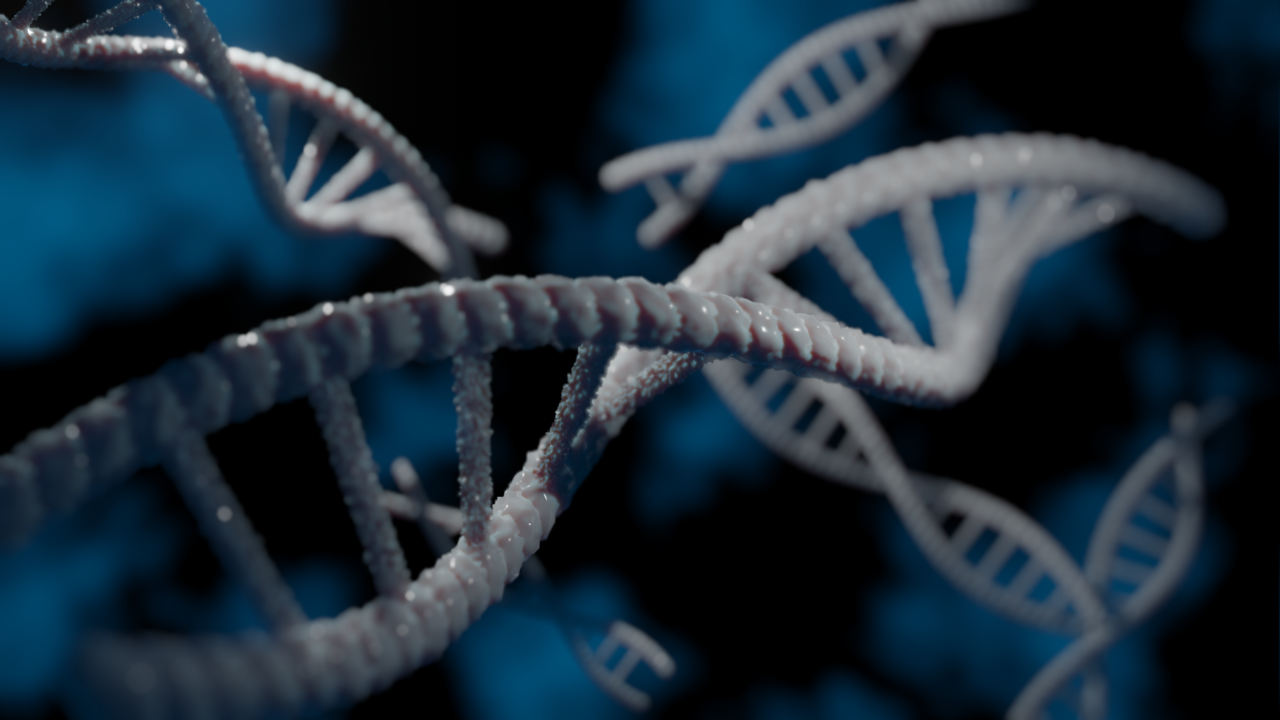
Anorexia nervosa has been understood, by turns, as a cultural illness, a psychiatric illness and a disorder of will — explanations that have accumulated for a century without quite adding up to a mechanism. New genetic research published in Frontiers in Psychiatry adds a molecular suspect: rare, damaging variants in PLIN4, a gene involved in how cells store fat, have been linked to increased risk of the disorder.
The finding, from a team including researchers Lutter and Robison, matters because of what PLIN4 does. The gene helps build and regulate lipid droplets — the tiny fat-storage compartments inside cells. Variants that damage that machinery suggest that for some patients, vulnerability to anorexia may be written partly into the body’s energy-accounting system: the cellular bookkeeping that tracks how much fuel is stored and how urgently it must be defended. That is a metabolic frame for an illness psychiatry has mostly described from the outside.
It joins a shifting scientific consensus. Large genetic studies over the past decade have repeatedly found that anorexia’s heritability overlaps not only with psychiatric conditions but with metabolic traits — body-mass regulation, lipid profiles, energy expenditure. The PLIN4 result gives that statistical pattern a candidate mechanism: a specific gene, a specific cellular job, a specific kind of damage.
The cautions apply with full force. Rare variants explain risk in a subset of patients, not the illness whole; genetics loads probabilities, not destinies; and no one should expect a PLIN4 test or treatment on any near horizon. Eating disorders remain biopsychosocial in the fullest sense, and the researchers’ work is a beginning, not a verdict.
But beginnings compound. Every gene that crosses from association into mechanism gives future drug hunters a target and gives patients something no less valuable: evidence, at the level of the cell, that their illness is not a character flaw. Anorexia’s science has spent decades arguing that point. PLIN4 is now part of the argument — written, appropriately, in the body’s own storage system.
Related reading: A New Option After Surgery: FDA Backs Tecentriq Combination for a High-Risk Colon Cancer · CDC Data Trace a Rare Brain Fungus Moving the Wrong Way · A Paused Hepatitis B Study, a Restart, and a Fight Over What Counts as Ethical