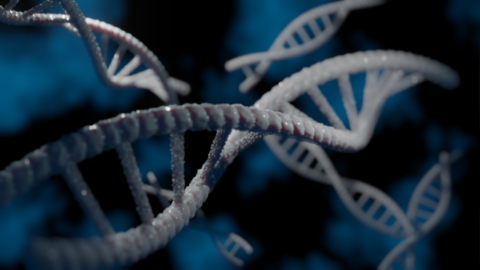
Ageing, at the level of a cell, is partly a filing problem. As decades pass, chemical marks accumulate on DNA — the epigenetic record — and the cell’s machinery reads its own genome through that clutter. A team at the University of Bonn reports that reprogramming cells can clear the clutter so thoroughly that cells taken from an 80-year-old donor show a molecular age below twenty by epigenetic measures.
The result, from the laboratory of Professor Oliver Brüstle, lands in one of the most contested neighbourhoods in modern biology. Epigenetic clocks — algorithms that estimate biological age from DNA methylation patterns — have become the field’s favourite yardstick. Resetting those clocks in a dish is not the same as reversing ageing in a person, and the Bonn result does not claim otherwise. What it demonstrates is the depth of the reset: not a partial polish of the epigenetic record, but a winding-back to readings typical of cells sixty years younger.
Reprogramming, the technique that converts adult cells into stem-like cells, has always carried this paradox. To make a cell young enough to become anything, you must erase what it has become — including, apparently, much of the chemical signature of its age. The Bonn work sharpens the practical question researchers have been circling for a decade: can the rejuvenating part of reprogramming be separated from the identity-erasing part, so that a cell could be made younger without forgetting what it is?
That separation, if it can be achieved safely, is where the therapeutic ambitions live — in age-related disease, in regenerative medicine, in organs whose cells have simply been running too long. It is also where the hazards live; cells that forget their age too completely can forget their instructions, which is a description of cancer.
For now, the finding is a measurement, elegantly made: eighty in, under twenty out, on the clock the field trusts most. The distance from that dish in Bonn to a medicine is measured in years of work. But every serious attempt to treat ageing as a modifiable process passes through results exactly like this one.
Related reading: A Dead Star May Be Growing a Second Generation of Planets · NASA's Picture of the Day Is a Crater Named for the Woman Who Moved a Telescope's Maker · An Inflammation Protein Helps Build Pancreatic Tumours. Blocking It Slows Them Down.