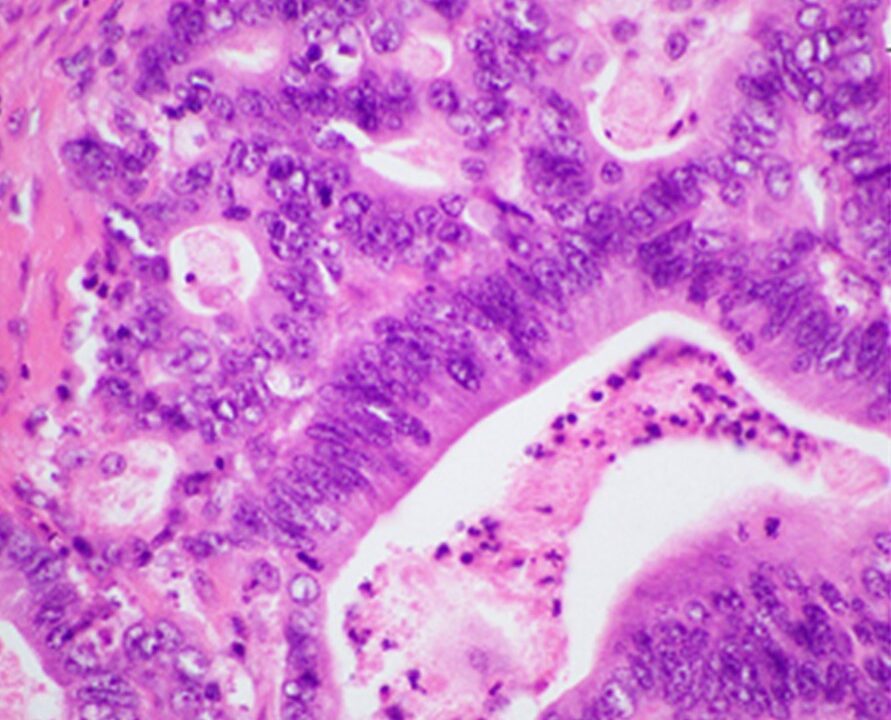
Pancreatic ductal adenocarcinoma — PDAC — is the cancer clinicians name when they want to describe a hard problem: usually found late, rarely surrendering to treatment. New research published in Nature Communications identifies a molecular accomplice. A protein assembly called the ASC inflammasome actively helps pancreatic tumours form, and blocking it reduces tumour formation — a result that moves the inflammasome from bystander to target.
Inflammasomes are the immune system’s alarm bells: protein complexes that sense danger and trigger inflammation. The study, led by Professor Brendan Jenkins with Dr. Joshua Chey among its researchers, shows that in pancreatic cancer the alarm does not merely respond to the tumour — it contributes to building it. Tumours, it turns out, can conscript the body’s own inflammatory machinery as construction equipment.
The therapeutic logic writes itself, which is exactly why it deserves scrutiny. If ASC-driven inflammation helps PDAC establish itself, then drugs that interrupt that pathway might prevent tumours from gaining their foothold or slow established disease. The distance between those two clauses is where drug development goes to be humbled: mouse-model tumour formation is not human survival, and inflammation suppressed in the wrong patient at the wrong moment can disarm defences the body needs.
Still, pancreatic cancer’s bleak arithmetic — it is projected to become one of the leading causes of cancer death in wealthy countries — means the field cannot afford to ignore any mechanism that demonstrably changes tumour formation. The inflammasome result gives medicinal chemists a defined protein complex to drug, gives trial designers a defined biology to select patients by, and gives a cancer famous for shrugging off advances a new place to be attacked.
Research of this kind rarely announces cures, and this announcement is no exception. It announces something arguably more useful at this stage: a culprit with a name, an address and a demonstrated role in the crime. Pancreatic cancer has survived a generation of blunt instruments. The era of picking its locks has to start with knowing which locks exist — and ASC has just been added to the list.
Related reading: A Dead Star May Be Growing a Second Generation of Planets · NASA's Picture of the Day Is a Crater Named for the Woman Who Moved a Telescope's Maker · Bonn Scientists Wind an 80-Year-Old Cell's Clock Back to Twenty